Grain Drying Systems • Horizontal & Vertical
Horizontal and vertical grain drying machines offer fully automated drying solutions that precisely control moisture balance and are highly energy-efficient.
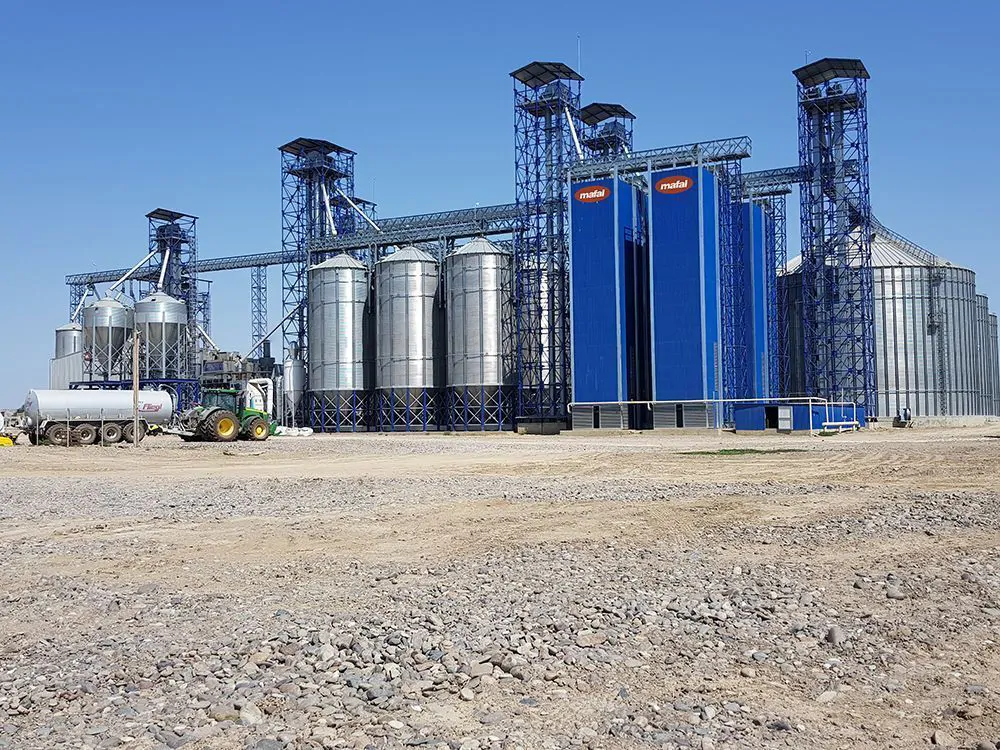
Overview of Grain Drying Systems
Horizontal and vertical grain dryers are designed to reduce the moisture content of wheat, corn, barley, sunflower, and similar products to their target moisture level in a homogeneous and controlled manner.
Horizontal & Vertical Configuration
Horizontal and vertical drying options for different capacities and site conditions; modular design suitable for existing facility layouts.
Closed-Loop Air Management
With its exhaust fan, intake louvers, and mixing chamber, the flow of hot air is precisely controlled; humid air is expelled in a controlled manner and mixed with fresh air.
Strong Galvanized Body
Galvanized and fixed base structure; long-lasting, low-maintenance industrial housing design for demanding field conditions.
PLC Controlled Process
With the Siemens-based PLC panel, temperature, airflow, product flow, and humidity targets are monitored and managed from a single point.
Working Principle
A controlled cycle of heat and airflow from the burner fan to the product outlet hopper.
1. Air & Gas Mixture
The burner fan mixes the fresh air it draws from the air intake louvers with the gas from the system. The mixture is ignited by the burner, producing controlled hot air.
2. Combustion Chamber & Transfer Channel
Hot air travels through the combustion chamber and is directed from the transfer channel to air ducts connected to the product chamber. The duct geometry has been optimized for homogeneous heat distribution.
3. Product Container & Heat Transfer
As the grain moves through the hopper at a controlled speed with the help of the internal structure and supports, it releases its moisture by coming into contact with the hot air from the air channels.
4. Removal and Recirculation of Moist Air
Some of the heated air is expelled, while some is mixed with fresh air drawn in through cooling louvers and returned to the system; this keeps the air's moisture saturation under control.
5. Achieving Target Humidity
When the product reaches the target moisture level, it passes through the discharge mechanism into the hopper and exits the system; the amount of product exiting the hopper is monitored by sensors, and the same amount of grain is fed back into the system from the inlet.
6. Continuous Loop & Automation
The PLC continuously monitors the drying process using temperature sensors, flow rate information, and product feedback; it automatically optimizes the burner, fan, and feed speed as needed.
Horizontal Grain Dryers
Horizontal flow drying solutions designed for high-capacity facilities and large-area sites.
Strong Galvanized Chassis
With its fully galvanized and fixed strong foundation structure, it ensures long-lasting use; heat losses are minimized thanks to external thermal insulation.
Flexible Product Entry
Grain input system suitable for different products and product conditions (moisture, density, grain structure); intelligent feeding working synchronously with the feeder elevator.
Homogeneous Transition
The internal roof and support structure allows moist grain to pass through the hopper in granular form, preventing channel blockages and ensuring homogeneous drying.
Ease of Maintenance
With service hatches providing access to the fan, burner, and air ducts, cleaning and maintenance processes can be completed quickly and safely.
Vertical Grain Dryers
Vertical drying solutions, especially those integrated into silos, with a high tower structure that takes up less space.
Thanks to the vertical design, site space is minimized; a compact drying and post-drying storage structure is created together with existing silos and conveyor lines.
The product moves downwards at a controlled speed along vertical columns; hot and cold air zones are defined in each layer to protect the product from sudden thermal shock.
Thanks to emergency discharge hatches, the product in the hoppers can be emptied in a controlled manner when necessary; system safety and product integrity are protected.
Automation & Security Infrastructure
PLC, temperature sensors, burner control, and pneumatic systems ensure safe drying from start to finish.
Temperature & Weather Sensors
Heat sensors automatically shut down the combustion system at critical temperature exceedances; the fans remain active, ensuring safe cooling.
Burner Control
Elster Krom Schröder or Dungs brand burners maintain the desired temperature consistently; their flexible design allows operation with LPG, LNG, or natural gas (NG).
Pneumatic Control
Pneumatic discharge mechanisms and fan shutters prevent product losses and protect the system from external factors.
Siemens PLC Panel
All heat flow, air flow, and temperature values in the system can be accessed via the PLC control panel; recipes can be defined, and alarms and reports can be managed.
Energy Efficiency & Operating Costs
Lower energy consumption through heat recovery, air recirculation, and intelligent fan control.
Heat Recovery
Some of the humid air is expelled while the remainder is mixed with fresh air and returned to the system; this reduces fuel consumption.
Intelligent Fan Management
High-capacity fans are controlled to operate only at the required flow rate, preventing unnecessary air circulation.
Automatic Feeding Control
The grain storage hopper is automatically fed by the feeder elevator, preventing idle operation and unnecessary energy consumption.
Insulation & Exterior Cladding
External thermal insulation and coatings minimize heat loss, thus saving on both fuel and electricity costs.
Grain Drying Line Gallery
Visual area for horizontal drying lines, vertical tower dryers, burner and fan assemblies.


Frequently Asked Questions
Suitable for grains such as wheat, corn, barley, rice, sunflower, soybean, and similar cereals. Temperature and time recipes are defined according to product characteristics.
Horizontal dryers are preferred in more widespread areas and at high flow rates, while vertical dryers stand out in sites where space is limited and in silo-integrated solutions. We are conducting a capacity and layout analysis together.
Heat recovery, closed-loop air management, intelligent fan control, and drying recipes defined via PLC minimize unnecessary energy consumption.